Lensos
Making sense of global news.
Client | Role | Duration | Status |
|---|---|---|---|
M0 | Product Designer | 4 Weeks | Shipped - VISIT SITE |
Product Design ⦿ ai/llM ⦿ System Design ⦿ System design ⦿ Framer ⦿ Web3 ⦿
What's this about
Not another news platform. A system to understand what's actually going on.
News is everywhere but still hard to follow. Too many sources, no context, everything feels disconnected. You read a lot but still don't understand much.
The shift
Most platforms
Show information. Articles, links, feeds. More volume. No connection between events.
LensOS
Shows how things connect. Context over volume. Understanding over reading speed.
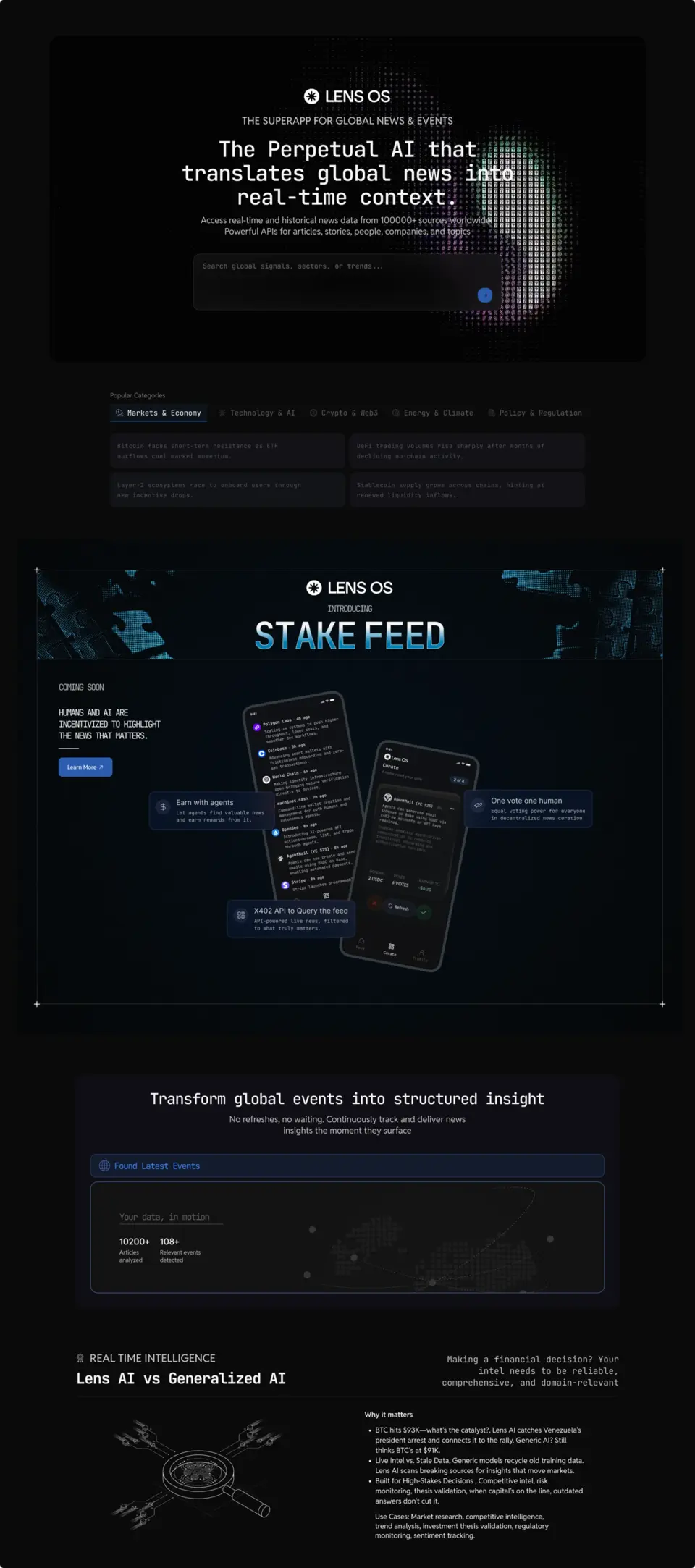
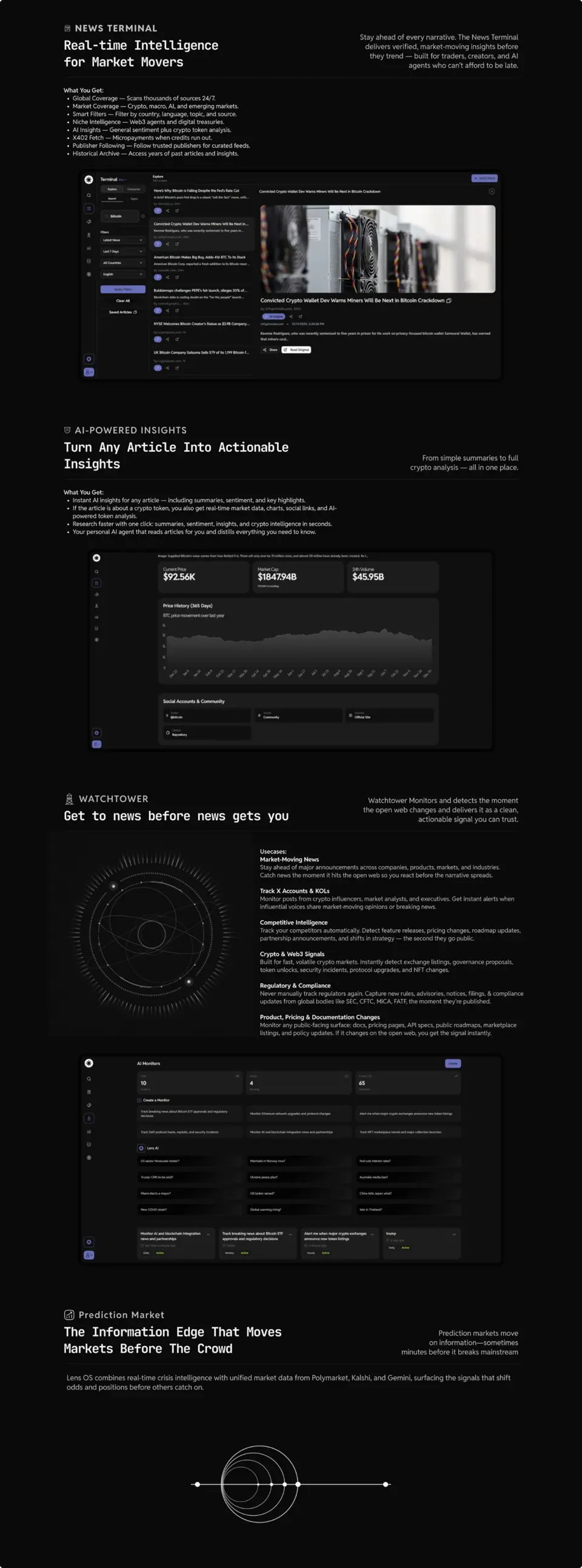
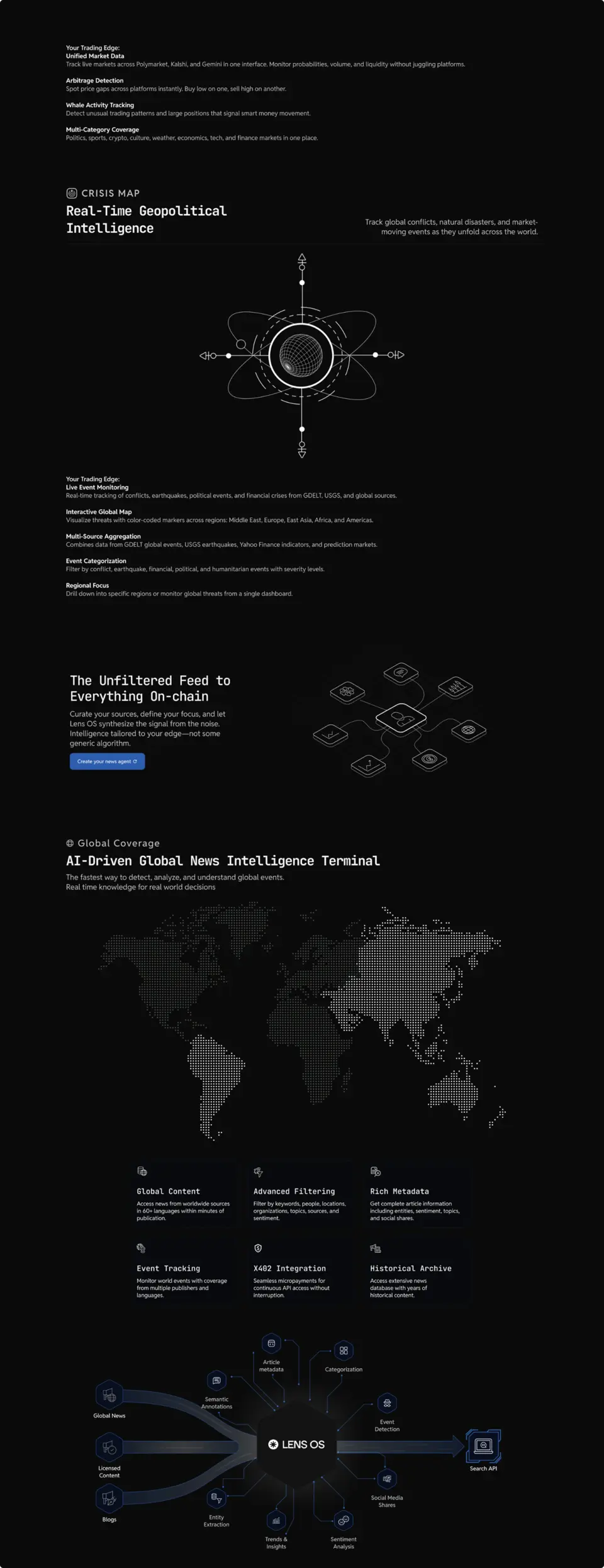
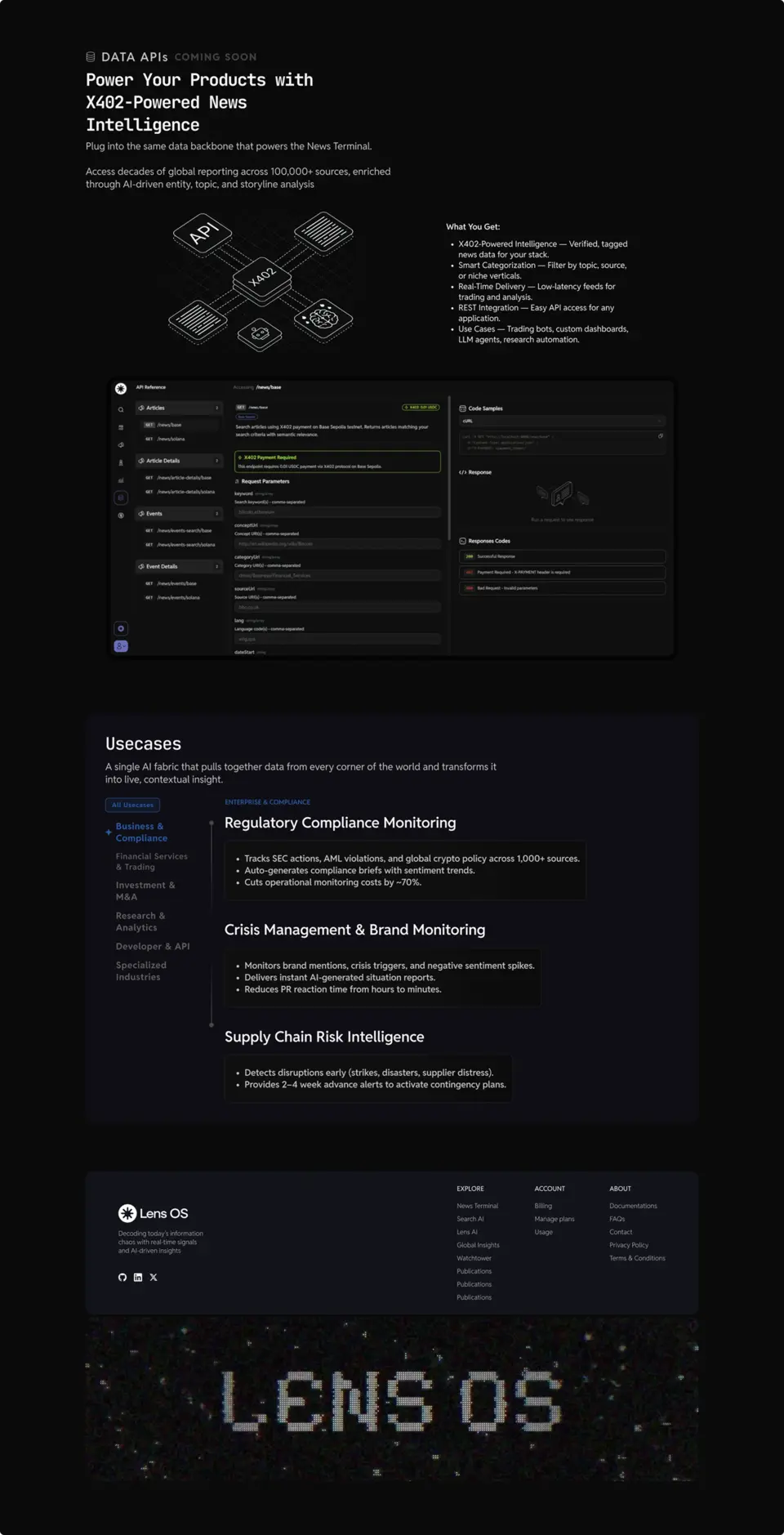
The system — 6 parts
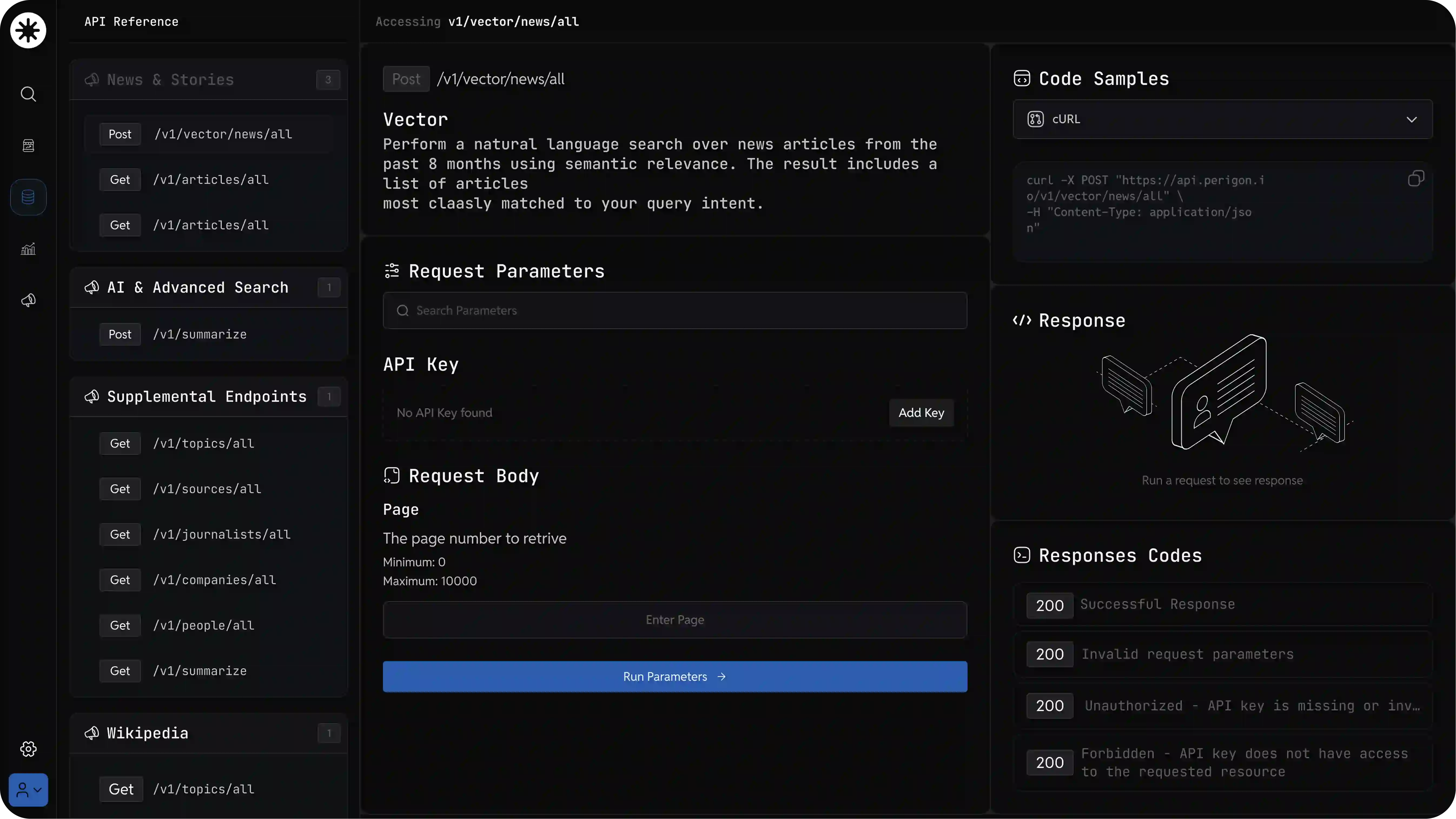
Instead of building features, I broke it into focused parts. Each one does one thing well.
Search
Explore anything — people, events, topics
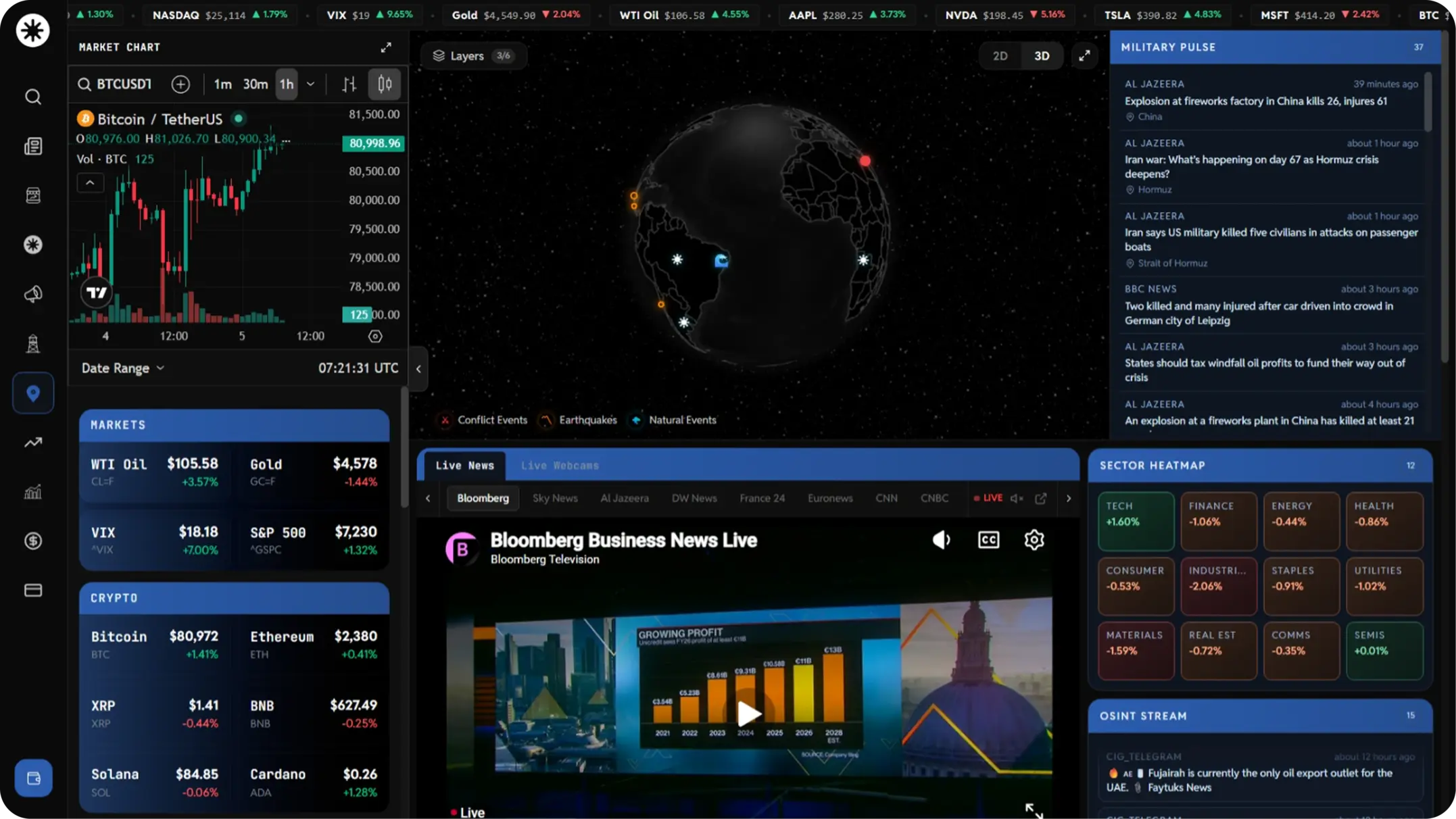
Terminal
See what's happening live, right now
Monitors
Track things over time, not just in the moment
Crisis Map
Understand events spatially — where, not just what
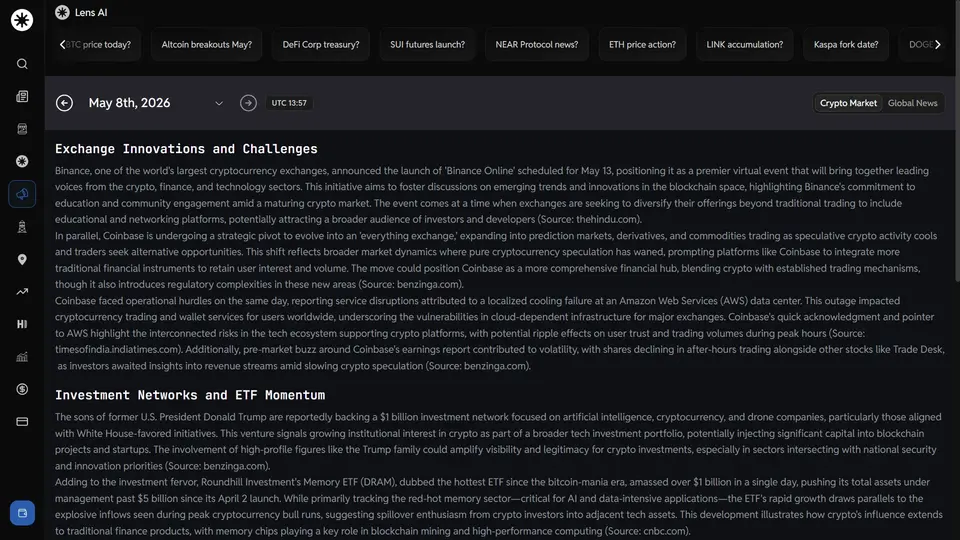
Insights
See patterns across time and sources
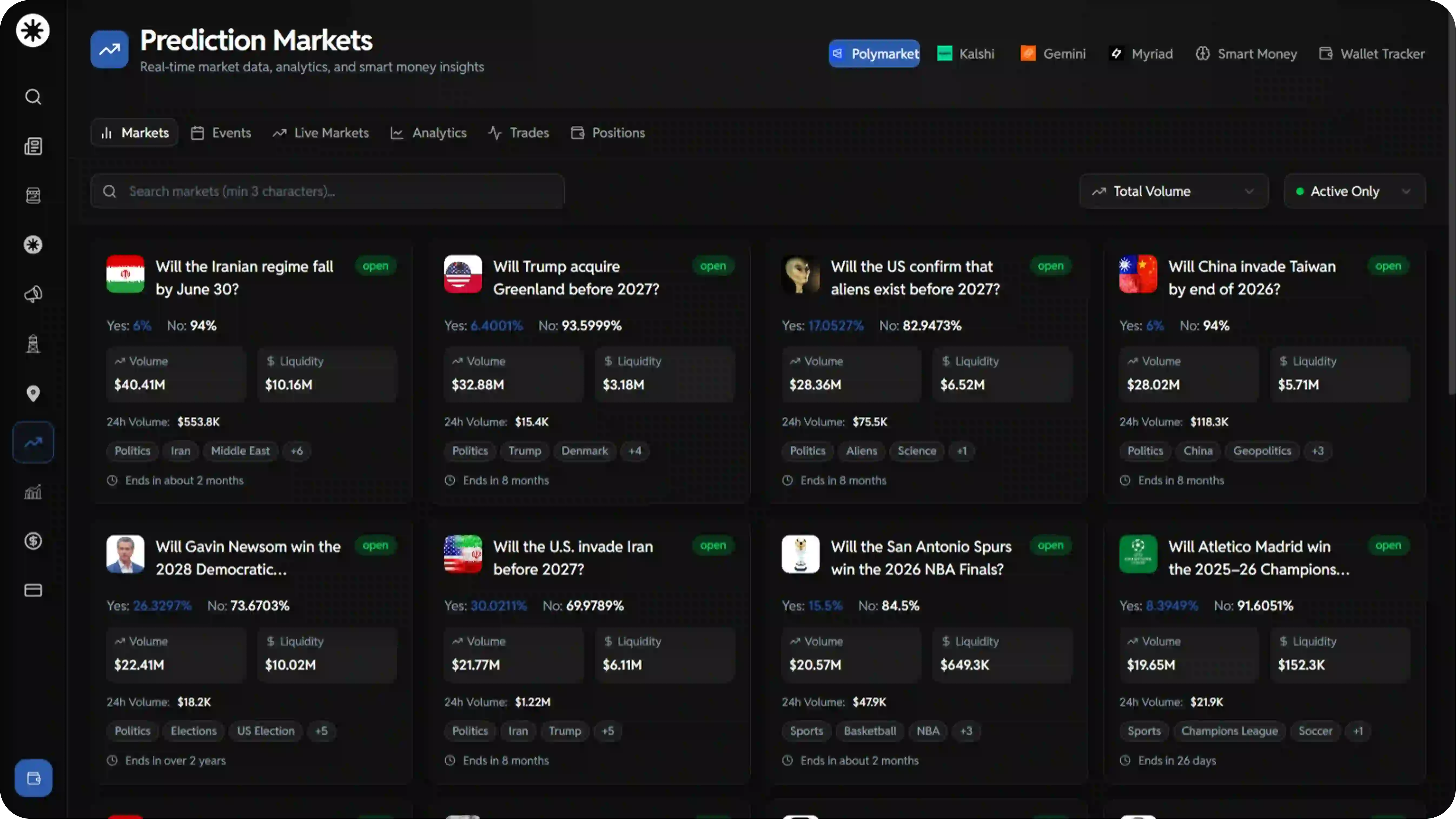
Prediction
Think ahead — not just react
Key decisions
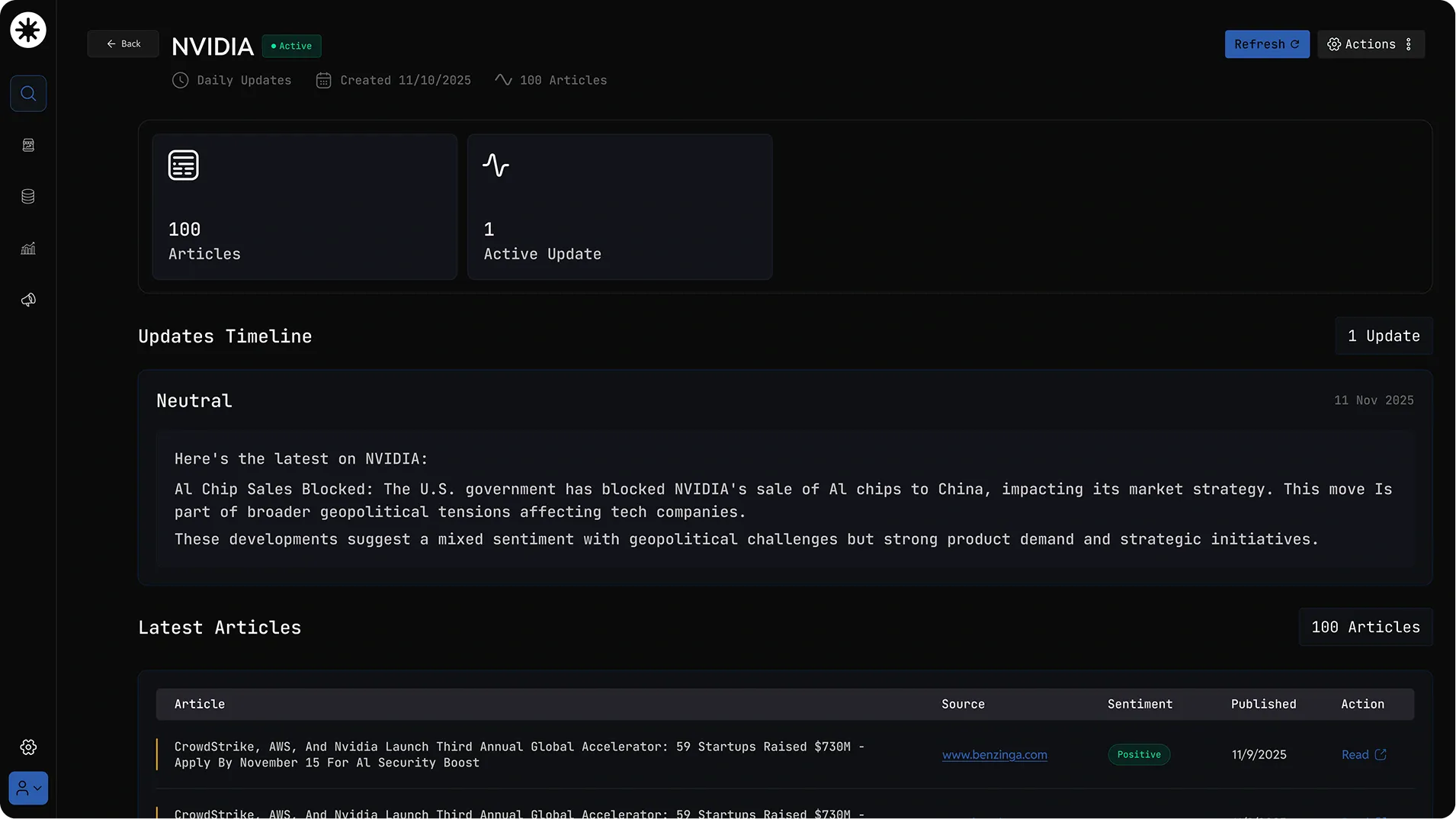
1.Start from an entity, not an article
Most news UX is article first. You read a piece and move on. LensOS starts from an entity. A company, person, or event. Everything lives under it. Updates, timelines, sources. Articles support the view, not lead it.
Why: Feeds fragment context. An entity keeps everything in one place, so understanding builds over time instead of resetting with every article.
2.No feed-style UX
Feeds optimise for volume and recency. That's the problem, not the solution. I removed the feed entirely — every surface in LensOS is structured around context, not chronology.
Unfamiliar to most news users. Accepted — the goal was understanding, and feed habits actively work against that.
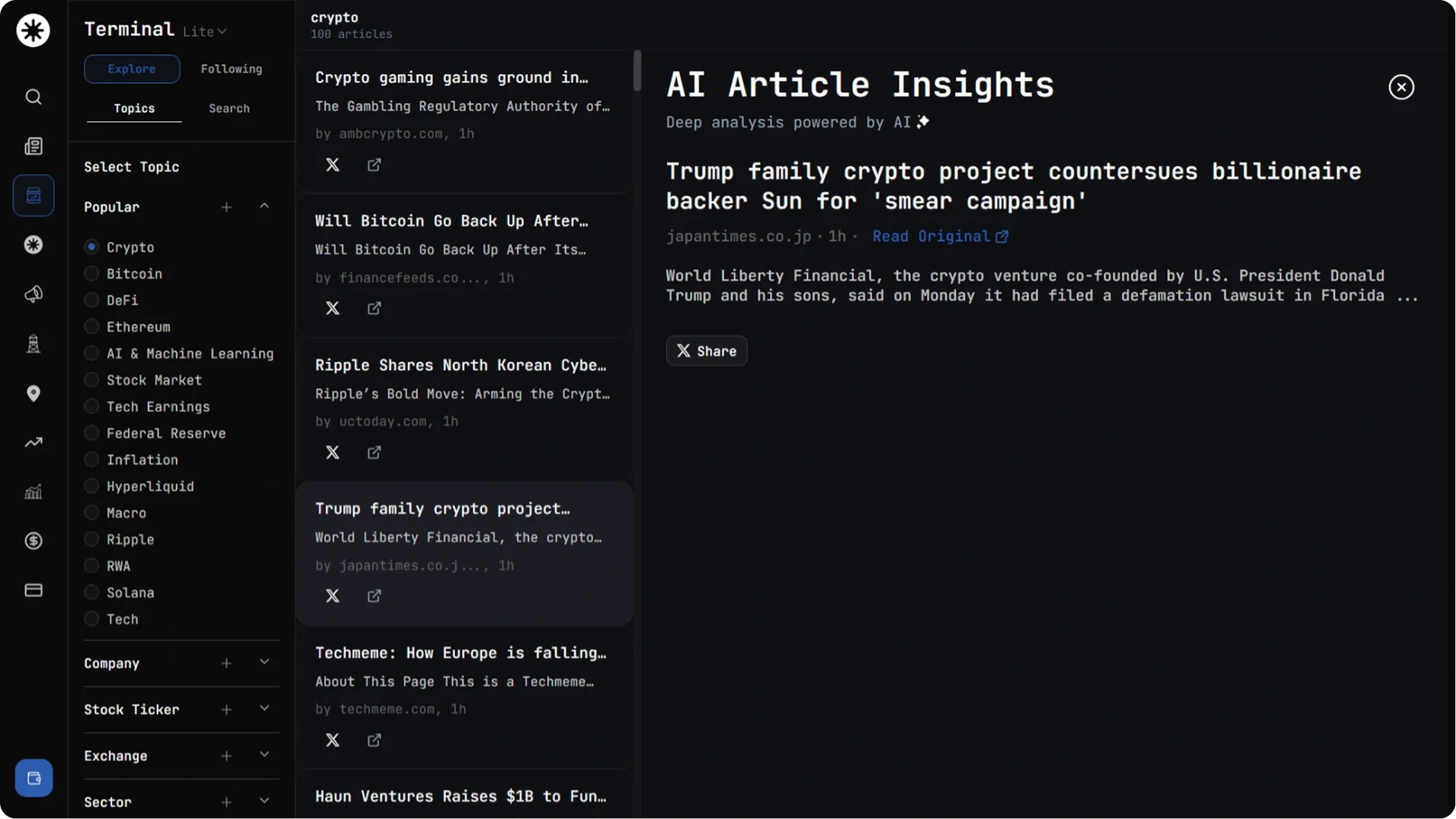
3.Designed for real-time first
The terminal is the core of the product — not search, not archives. What's happening right now, structured and legible. Everything else is built around that live state.
4.Context over volume
Less is more — but only if the less you show is the right thing. Every surface filters aggressively and shows connections between events, not just the events themselves.
The challenge: Keeping it powerful without making it overwhelming. That tension shaped every layout decision in the system.
outcomes
0Feed-style surfaces removed as a structural decision | 1Unified system search, live, track, map, insights, predict |
Real-timeDesigned for what’s happening now, | EntityNews treated as a graph of people, orgs, events — not a stream of articles |
The hard part
Keeping it powerful without making it overwhelming. The system does a lot — the design challenge was making each part feel focused, even when they're all connected. Every screen had to answer one question clearly before inviting the next.
Learnings
Entities beat articles as a design primitiveOnce I shifted the mental model, every surface became clearer about what it was showing and why. | Removing the feed was the most important decisionIt forced every surface to justify itself structurally — not just fill space with recency. |
Real-time changes everythingDesigning for live data means designing for states — loading, live, stale, error. Static mockups don't catch this. | Complexity is fine. Confusion isn't.The system is genuinely complex. The job was making each layer feel inevitable, not overwhelming. |
WHAT I’D IMPROVE
The first-time experience needs more guidance — six modules is a lot to land on. I'd design a clearer entry point that orients new users before giving them the full system.
If it’s worth building, I’m interested.
I take on projects, part-time work, and full-time roles.
send the details — we’ll figure it out.
vizuraja@gmail.com
CHAOS
→
CLARITY

Active here
V
I
S
W
A
You could have been anywhere on the internet, yet you’re here. thanks for visiting